



Mental Well-Being: The True Heart of Education
November 20, 2025 Kapila Yadav
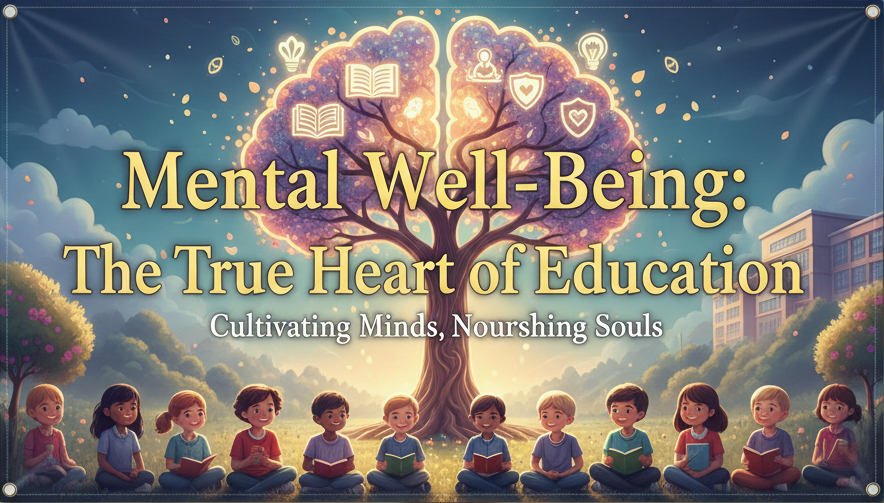
Topic - "Mental Well-Being: The True Heart of Education"
Student mental well-being is at the heart of real education. A child may score full marks, win trophies and collect certificates, yet feel lonely, anxious or constantly “not good enough”. When the mind is tired, scared or overloaded, even the brightest student cannot give their best. Mental well-being is what allows children to learn joyfully, build healthy relationships and grow into confident, balanced adults.
Screens, Stress and Self-Esteem: A Noisy World for Young Minds
Today’s world is noisy for young minds. They face academic pressure, competition,
family expectations, peer influence and the constant comparison of social media. Many children silently battle stress, overthinking and low self-esteem. Some become restless and distracted; others withdraw and stop sharing what they feel. If we ignore their
emotional world and focus only on marks and performance, we are building success on a very weak foundation.
Strong Minds, Bright Futures: Handling Success and Failure
Good mental health gives students the strength to handle both success and failure. It helps them bounce back after a bad grade, a fight with a friend or a disappointing result. It allows them to concentrate better, sleep peacefully and enjoy the simple moments of childhood. Emotionally strong children are kinder, more empathetic and more capable of handling conflicts without breaking down. They learn not only what to think, but how to handle their thoughts.
Mental well-being also shapes identity. A child who grows up feeling heard, respected and valued learns to respect themselves and others. On the other hand, constant
criticism, comparison and neglect can create deep wounds that affect them for years. As parents and educators, we must remember that our words become their inner voice. The way we speak to them is how they will one day speak to themselves.
Small Steps, Big Impact: Supporting Student Mental Health
To support their mental well-being, a few simple steps can make a big difference.
Reducing screen time, especially late at night, helps their mind rest and improves sleep.
Good parenting in today’s era begins with putting our own phone down, making eye contact and truly listening when they speak. A disciplined daily routine—with regular sleep, study, play and quiet time—gives them a sense of safety and control. Finally, encouraging metacognition, or “thinking about their thinking”, helps students reflect on their emotions, question negative thoughts and choose healthier responses.
Not Just Exam-Ready, Life-Ready
In essence, mental well-being is not a “luxury” or an extra chapter; it is the core of a child’s growth. When we protect and nurture a student’s mind, we are not just preparing them for exams—we are preparing them for life.

Kapila Yadat
PRT