The Healing Classroom: Making Stories Into Safe Spaces
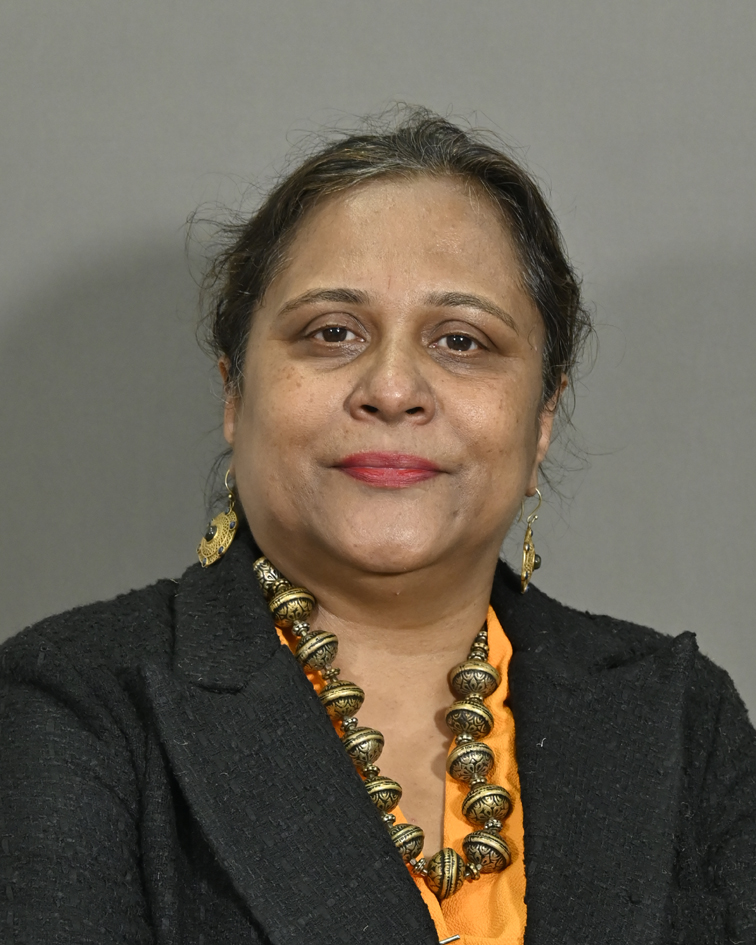
February 24, 2026 Ms. Rupsha Bose (TGT - English)
Maya Angelou once talked around the "agomy" of an untold story. I think of this each morning when I stand in front of my dear studentsof classes VII & VIII. What I see is not just a room of forty kids, but forty diverse universes, forty diverse concerns and forty cases of calm bravery.
There is the child who never raises his/her hand, the one who snickers as well boisterously to stow away their nerves and the one who gets idealised scores but cannot very meet your gaze.
As educators, we are frequently pushed to wrap up chapters and meet due dates. No one truly instructs us how to tune in for what is not being said. But in my experience, that is where the real learning starts. A healing classroom does not begin with a school approach. It starts with a teacher who is willing to tune in and a child who knows they have a bear to recline on.
The Circle of Security: From Hush to Out Loud
Teachers all over the world are starting to realize what they have felt in their hearts for a long time. In the United States, composing centers like 826 National, found that when children from intense foundations, they get to possess their own stories, the entirety of the vitality of the school changes. It is a significant move. When children are energized to compose almost their own lives, disturbances really go down. A child who battled to speak up, now begins composing stories that have been covered up interior for a long time.
In the Joined together Kingdom, bunches like Place2Be advance mental wellbeing through narrating and craftsmanship. Their information appears positive changes in behavior but the genuine alter is harder to measure with numbers. It is almost the "vibe" in the room. When the work areas are moved into a circle and a child inquires, “Can I share something?” the entire room shifts. The quiet stops feeling heavy and gets to be a shared encounter. To be defenseless is no longer a shortcoming but a way to connect.
Anne Straight to some point caught on this as some time recently there were investigating papers about it. In her journal, she said that she seemed to shake off all her distresses as she composed. It did not alter the war but it changed how she felt within. I see this same in my children. Their issues might not be overwhelming for us but they are exceptionally burdensome for them. When they write or read out loud, something in them at long last settles.
When Fiction Gets to be a Secure Harbor
A few months back, a child in my class shared a monologue about a broken clock that would travel through time. The class giggled, to begin with, since the thought appeared a bit dreamlike. The clock would solidify at cumbersome times. It would skip minutes when it felt froze and attempt to go back to settle botches. But as they kept perusing, the relationship got to be clear. The clock went back to a day when it replied to an address wrongly. It fast-forwarded to maintain a strategic distance from a day that felt as well hard.
It was self-evident that the clock was not really broken. It was fairly overpowered. Through that story, the child said things they might never have said specifically. This is the heart of account treatment. Michael White, who did incredible work in Australia, used to say that "the individual is not the issue, the issue is the issue."
When children put their uneasiness into a character, they halt saying “I am a failure” and begin realizing they are fair and manage with an intense situation.
The Teacher, as Storykeeper :
Creating a space like this doesn't require an enormous budget, it just requires acknowledgment and acceptance. It implies giving a child consent to write in without circling each botch with a red pen. It implies letting them be befuddled without feeling humiliated. It moreover inquires about something for us as teachers. We have to learn to tune in without attempting to "settle" everything. In some cases, we are required to keep the story safe.
David Augsburger once said that being listened to is so near to being adored that most individuals cannot tell the difference at all. In a classroom, that kind of tuning in, can ground a child in a way that holds on to them for their entire life.
Emotional Engineering in a Computerized World :
We live in a time of Counterfeit Insights and high-tech devices that can grant us a personalized worksheet in seconds. But there is no AI framework that can sit with a child, whose voice is shaking whereas they perused their possess words. The healing classroom is not about teachers getting to be psychological specialists. It is about recollecting that each lesson influences a genuine human being, a child to be precise
Years afterward, children will disregard the correct substance of a chapter. But they will never disregard how they felt in that room. They will keep in mind if their story was invited or if it was overlooked.
As C.S. Lewis composed, “We read to know we are not alone.” In a healing classroom, we tell our stories so that no child ever has to feel they are.