


Experiential Learning in Early Years: Learning by Doing
March 16, 2026 Ms. Neetu Soni
Experiential Learning in Early Years: Learning by Doing
As a nursery teacher, I strongly believe that young children learn best through experiential learning—learning by doing. In the early years, children are naturally curious. When they touch, explore, and actively participate, learning becomes meaningful and long-lasting.
Experiential learning helps children develop cognitive, social, emotional, and physical skills in a natural way.
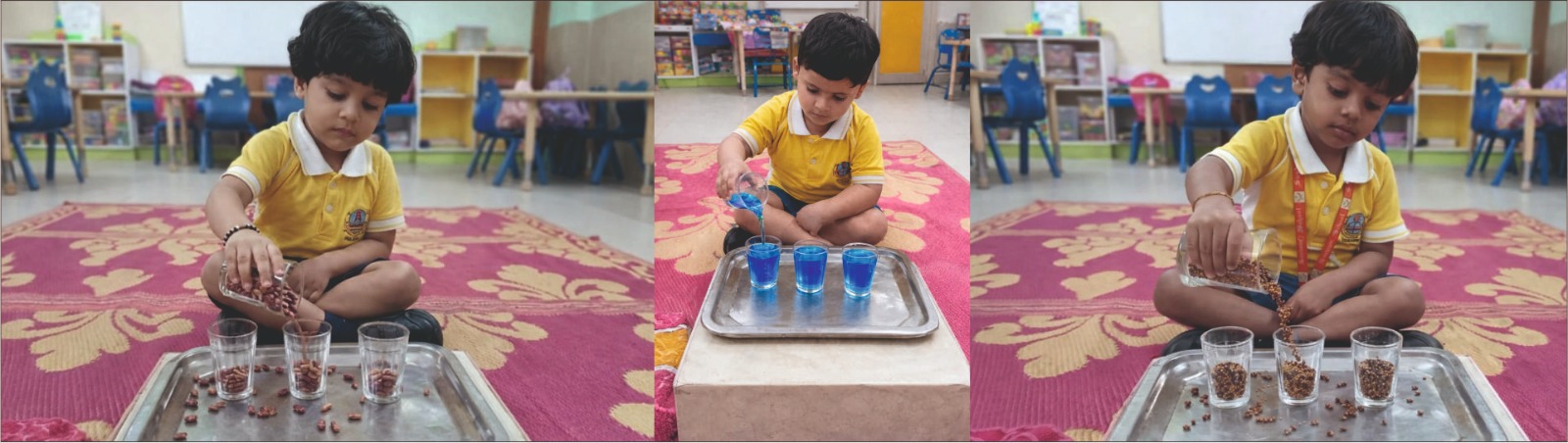
At Sunbeam, this approach has been an integral part of our teaching from the very beginning, much before it was formally emphasized in the National Education Policy(NEP). NEP now highlights play-based and activity-oriented learning, reaffirming what we have always practice. A simple example is a pouring activity
pouring activity may look like play, but it is powerful learning in action.
When a child pours water or grains from one container to another, they are not just having fun. They are:
Strengthening fine motor skills
Developing hand–eye coordination
Improving focus and concentration
Learning control, balance, and precision
Gaining confidence through independence
At the same time, children experience joy, success, and readiness for real-life applications—like pouring water into a glass or helping at home.
Along with skill development, children enjoy the process and gain confidence as they perform tasks independently. Such activities also prepare them for real-life situations, making learning purposeful.
When children learn through experiences, there is no pressure—only joy, curiosity, and discovery. Experiential learning builds strong foundations in the early years and nurtures confident, capable learners ready for life.