
Encouraging Children to Stay Connected to Their Roots
November 20, 2025 Surekha Kapoor
Encouraging Children to Stay Connected to Their Roots
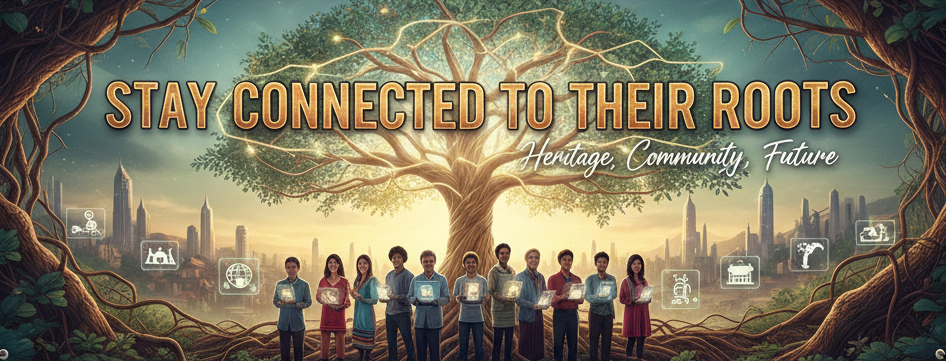
A child growing up without knowing the story behind Diwali lights, the rhythm of a tabla beat, or the significance of regional festivals is like watching a beautiful mosaic from a distance – you see the colours but miss the patterns that give it meaning. In a rapidly globalizing world, celebrations can become robotic, losing excitement and fervor. Nurturing a bond with one’s heritage isn’t just sentimental; it’s a vital investment in identity, confidence, and social harmony.
In a Global Village: Every individual seeks a sense of belonging. For Indian society, that sense comes from centuries of history, languages, art, religions, and traditions. Knowing where they come from helps children answer “Who am I?” without confusion and unites them with Indians worldwide.
Cultural Continuity: Stories of ancestors, epics like Ramayana and Mahabharata, and local folklore transmit values like respect, resilience, and community. A child who can speak a few sentences in their mother tongue or perform a traditional dance feels a quiet pride that stands out confidently in multicultural settings.
Preserving Language Diversity: India has 22 scheduled languages and hundreds of dialects. Each language opens a unique worldview. Bilingual or multilingual children exhibit better problem-solving skills and creativity. When grandparents teach Tamil, Telugu, Bengali, or Santhali songs, they pass down not just words but oral histories that might otherwise fade. Shared cultural threads like dharma unite children across states, preserving national integration.
Emotional Well-being: Rituals like Pongal, Eid, Lohri, Bihu, or Makar Sankranti create predictable rhythms in a child’s life, supporting emotional well-being and societal adjustment. Celebrating festivals year after year offers emotional anchor points, much like re-reading a favourite book. The familiarity is comforting, reinforces community bonding, and reduces isolation. Understanding different festivals fosters curiosity, acceptance, and empathy.
Artistic Heritage: From Mohiniyattam or the Cobra dance of Kerala to Kalaripayattu and Madhubani paintings of Bihar, India’s art forms are vibrant and diverse. Exposure to traditional art forms nurtures imagination. A child learning Kathak can later blend it with modern dance forms. Artisanship teaches patience, precision, and cultural appreciation — skills that transfer to academics and careers.
Tradition vs Modernity: Some argue tradition hinders modernity. But tradition and modern education are not mutually exclusive. They complement each other — like coding skills paired with classical music. Heritage is dynamic, adaptable to contemporary contexts, as seen when Lt. Birju Maharaj ji infused tatkar beats into “launch of Mangalyaan” in his performance.
Final Thoughts: Connecting children to their roots is like giving them a compass in life. It doesn’t limit their horizons; it equips them with confidence, identity, and empathy. As educators, parents, and community leaders, it’s our responsibility to weave heritage into everyday experiences — through stories, languages, festivals, and arts. Let’s nurture a generation that celebrates its past while innovating for the future. Because when a child knows where they come from, they’re already halfway to knowing where they’re going.
> Having performed in stage productions throughout my childhood, be it classical/folk dance, musicals, dramas and skits in English and Hindi have made me a confident self-motivated achiever today. Though I admit I am extremely emotional and soft-hearted, it’s a task for my foes to turn my thoughts to negativity, as my own connect to my heritage, culture, religion and roots reinforces in me a strength which can only be felt through my immersion into my Indianism – Proudly so btw.
What tradition or art form do you think should be promoted more among kids today? Share your thoughts below!
Surekha Kapoor
Parent of Om Kapoor (XII-G)